Introduction
Many people want a brighter smile, so teeth whitening is very popular. However, choosing between professional teeth whitening and at-home methods can be confusing. You may wonder about professional teeth whitening safety, at-home teeth whitening risks, and safe teeth whitening options. In this blog, we will compare both choices. We will also discuss dental whitening safety, teeth bleaching side effects, and dentist-approved whitening methods. Understanding the facts can help you make the best decision for your smile.
What Is Teeth Whitening?
Teeth whitening is a process that makes your teeth look whiter. It removes stains and discoloration from the surface of your teeth. Usually, whitening uses special gels or strips. These products often contain hydrogen peroxide or carbamide peroxide. Both break down stains and lighten the color of your teeth. While many people use teeth whitening for cosmetic reasons, it is important to know the safest way to do it.
Professional Teeth Whitening: Methods, Benefits, and Safety
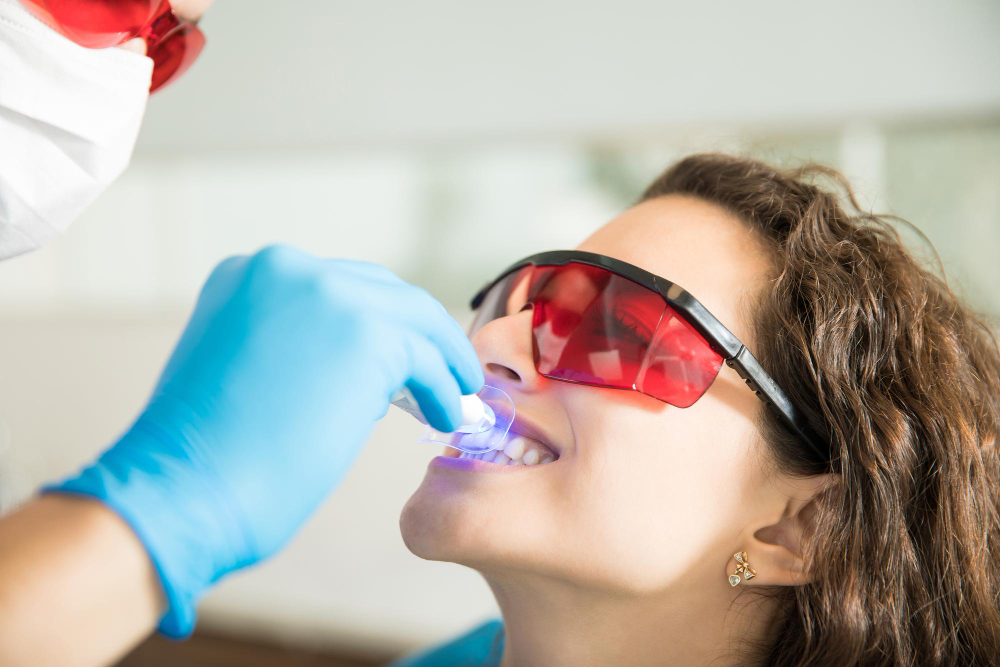
Professional teeth whitening is done by a dentist in a clinic. Dentists use stronger whitening agents and special tools. Because of this, results are often faster and more noticeable. According to the American Dental Association (ADA), professional whitening is safe when done by a trained dentist.
Because dentists check your oral health first, they can spot problems before whitening. This makes professional teeth whitening a dentist-approved whitening option.
At-Home Teeth Whitening: Types, Effectiveness, and Risks
At-home teeth whitening is easy and can be done with products from stores or online. These include whitening strips, gels, trays, and toothpaste. Some people also try natural remedies, but these are not always safe or effective.
According to the ADA, not all at-home products are tested for safety. Therefore, it is important to choose dentist-approved whitening products and follow instructions carefully.
Comparing Safety: Professional vs. At-Home Whitening
When comparing dental whitening safety, both methods can work. However, professional teeth whitening is usually safer. Dentists use safe products and protect your gums. They also watch for teeth bleaching side effects, such as sensitivity or gum burns.
On the other hand, at-home teeth whitening risks include using too much product or using it too often. This can harm your teeth and gums. In addition, some at-home kits may not fit well, leading to uneven results or irritation.
Tips for Safe Teeth Whitening
To keep your teeth and gums healthy, follow these tips for safe teeth whitening:
By following these steps, you can lower the risk of teeth bleaching side effects and enjoy a brighter smile.
When to Consult a Dentist
Sometimes, it is best to ask a dentist before starting any whitening treatment. For example, if you have sensitive teeth, gum disease, or dental work like crowns or fillings, talk to your dentist first. They can suggest the safest teeth whitening options for you. In some cases, professional teeth whitening may be the best choice.
Conclusion
In summary, both professional and at-home teeth whitening can brighten your smile. However, professional teeth whitening is often safer and gives faster results. At-home options can work if you use them carefully and choose dentist-approved products. Above all, consult a dentist to choose the safest teeth whitening method for your needs.