
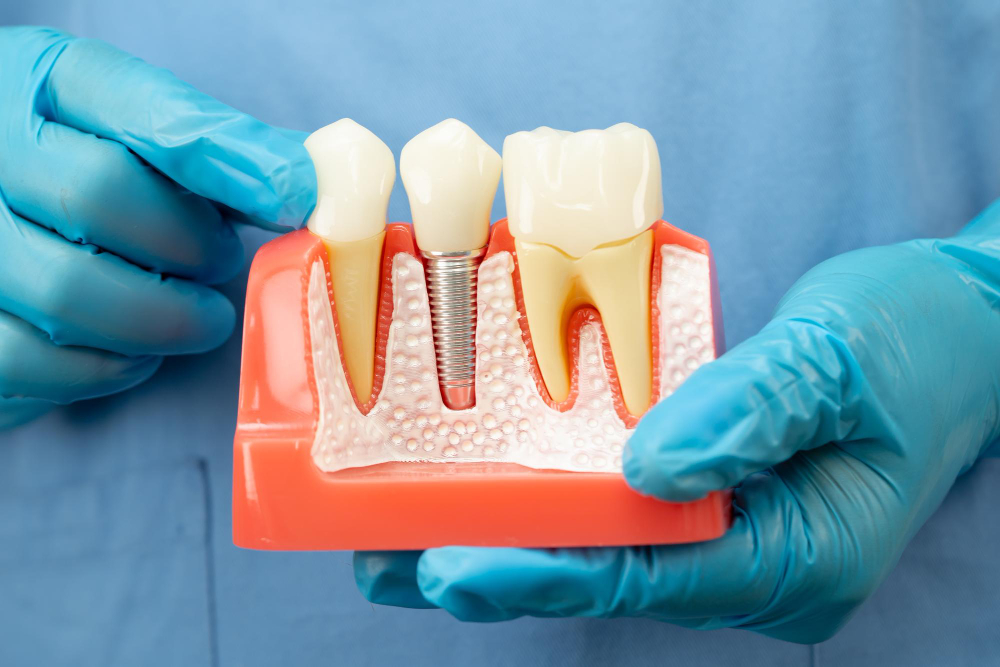
What is a Dental Implant?
A dental implant is a small metal post that replaces a missing tooth root. Dentists place it into the jawbone. Then, they attach a crown, which looks like a real tooth, on top. Because dental implants are strong and stable, they help people chew and smile with confidence. Many people choose dental implants for a long-lasting solution to missing teeth.
How Does a Dental Implant Work?
First, the dentist places the dental implant into your jawbone. Over time, the bone grows around the implant. This process, called osseointegration, helps keep the implant secure. After healing, the dentist adds an abutment, which connects the implant to the crown. Finally, a custom-made crown is attached. As a result, the new tooth looks and feels natural.
Benefits of Dental Implants
Dental implants offer many advantages over other tooth replacement options. For example, they look and feel like real teeth. In addition, they do not slip or move while eating or speaking. Here are some key dental implant benefits:
Who Needs a Dental Implant?
Not everyone needs a dental implant. However, you may be a good candidate if you:
Still, only a dentist can decide if a dental implant is right for you. They will check your mouth and health history before making a recommendation.
The Dental Implant Procedure (Step-by-Step)
The dental implant procedure usually takes several steps. Each step is important for a safe and lasting result. Here is what you can expect:
Because healing is important, you may need to wait between steps. Your dentist will guide you through each part of the dental implant procedure.
Risks and Considerations
Although dental implants are safe for most people, there are some risks. For instance, infection can occur at the implant site. Sometimes, the bone may not fuse with the implant. In rare cases, nerve damage or sinus problems may happen. However, choosing a skilled dentist lowers these risks. Always discuss your health and concerns with your dentist before starting the dental implant procedure. (Source: CDC, American Dental Association)
Aftercare and Recovery Tips
Proper care helps your dental implant last longer. After the procedure, follow these dental implant recovery tips:
With good care, your dental implant can last many years.
Frequently Asked Questions
How long does a dental implant last?
With proper care, a dental implant can last 10 years or more. Many last a lifetime.
Is the dental implant procedure painful?
Most people feel little pain. Dentists use numbing medicine to keep you comfortable.
How much does a dental implant cost?
Costs vary. Your dentist can give you an estimate based on your needs.
Can anyone get a dental implant?
Most healthy adults can get dental implants. However, some health conditions may affect your options.
In summary, dental implants are a safe and effective way to replace missing teeth. Consult a qualified dentist to find out if a dental implant is right for you.